Since 2004, there has been no legal requirement to record baronies in Scotland. In the absence of a register, false or questionable claimants have appeared in published sources. The Roll addresses this by maintaining a strict, verified and public record — a trusted resource for scholars, genealogists and all those interested in Scotland’s heritage.
Why a Roll? A century ago the baronetage was in disarray: titles were bought, and assumed without right, and in 1900 the baronets’ own Registrar wrote that there was “not in existence a single tribunal” to test a claim. The remedy, approved by Royal Warrant in 1910, was an official Roll that admitted a name only on proof. The Roll of Scottish Barons applies the same remedy to the baronage: it claims nothing new for barons, and asks only for proof. Read how the baronets pleaded the barons’ nobility.
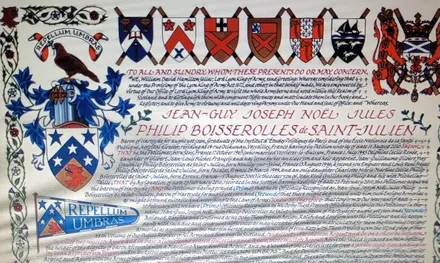
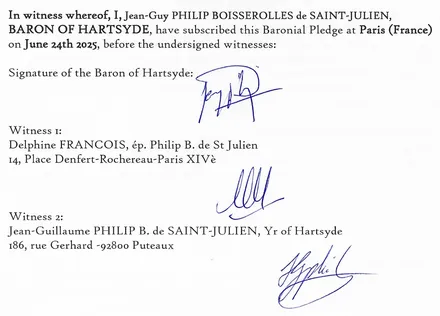
Because the Roll is open source, nothing is asked to be taken on trust. Every entry publishes the credentials on which it rests — Lyon Court instruments, Scottish Barony Register references, gazette citations and images of original documents — so that anyone, anywhere, may verify a title for themselves.
We, as custodians of the Roll, do not wish to own or control this entity; we plan to eventually transfer its oversight to government supervisors to ensure proper checks and balances into the future (once agreed with officials).
Inclusion is voluntary but requires adherence to rigorous criteria. As custodians of the Roll, we collaborate with recognised authorities to authenticate claims, and the non-recognition of unverified titles is fundamental to our work.

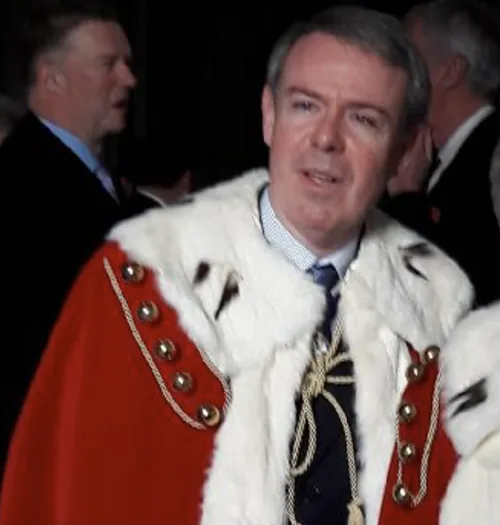
 Enrolled